
RESILIENCE, RESISTANCE, AND DENIAL
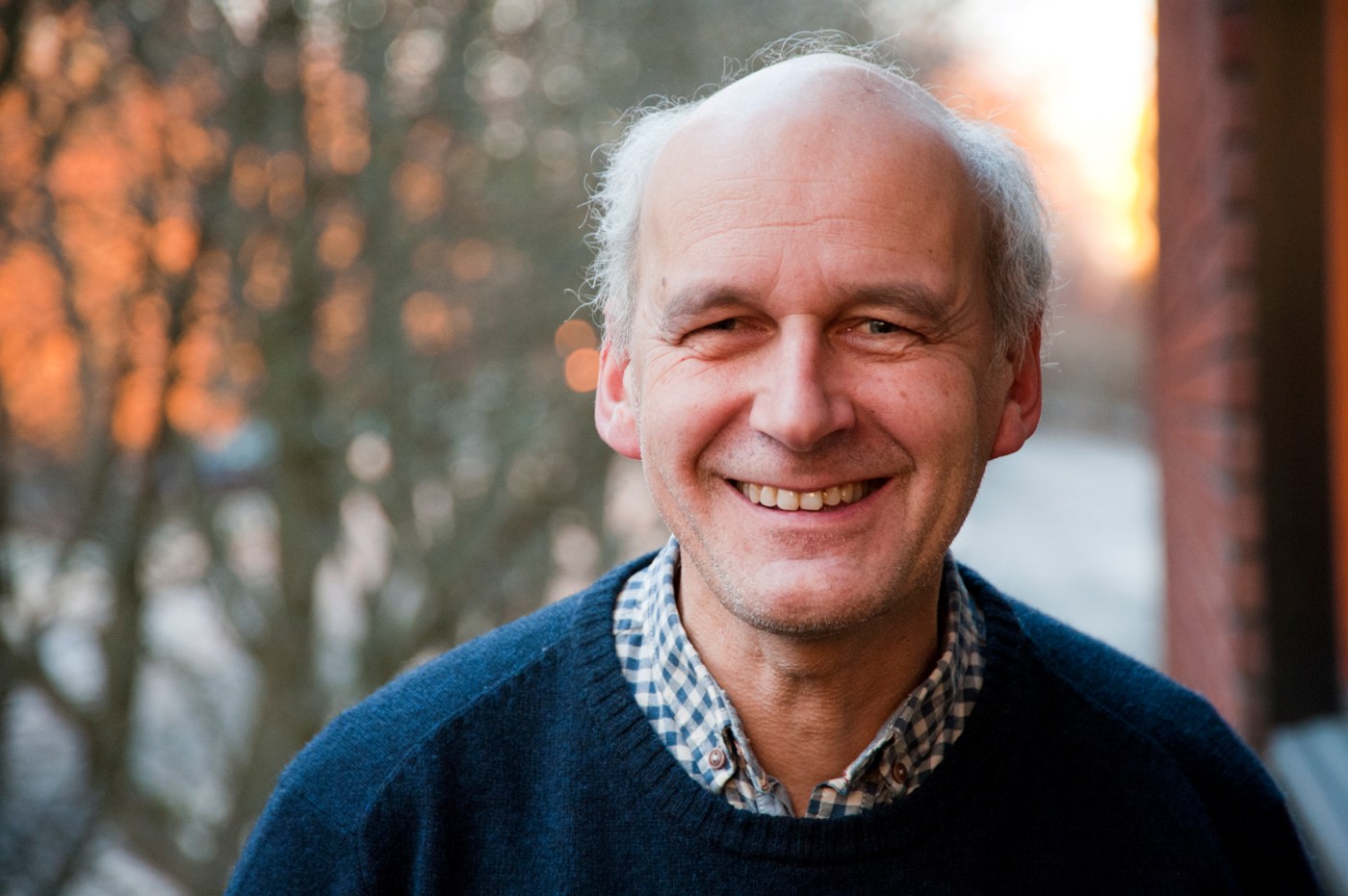
By Arne Johan Vetlesen / Professor of Philosophy at the University of Oslo.
For Thomas Hylland Eriksen, 1962-2024.
/
“DRILL, BABY, DRILL”
Recent years have seen the emergence of a correlation that has taken many by surprise: the more visible the consequences of climate change, the greater the popular support for political parties that promise to “drill, baby, drill”. Donald Trump’s successful bid for a second term as U.S. President may well be the most prominent case in point, but it is part of a broader trend that includes my own country, Norway. The message seems to be that the more indisputable the warnings of climate science turn out to be before our eyes, meaning here and now, not elsewhere and in the future, the more stubbornly is the present trajectory, that of fossil fuels based economic growth, held on to.
To point out the correlation between two phenomena is not to explain anything; it is to invite questions about why they occur, either simultaneously or in a sequence, questions about cause and effect. What is the correlation I mentioned essentially about?
It is about danger, and responses to that danger. Climate change poses a danger to human society and to nonhuman species and lifeforms, and as such it requires an adequate response, one that is suited to minimize or eliminate the danger by targeting its root causes. Given this science-based way of putting it, it is noteworthy that such a response is not forthcoming but conspicuously lacking. Shouldn’t we expect that the greater and more tangible the danger we are facing, the greater will be our readiness to do what it takes to avert it? And shouldn’t this expectation apply especially in a situation where what causes the danger are practices that we humans are involved in, indeed help sustain? If the problem is caused by us rather than by some alien force outside our power and control, doesn’t this human-caused dimension strengthen the prospect that we will indeed do what is necessary, namely by changing our practices?
Shouldn’t we expect that the greater and more tangible the danger we are facing, the greater will be our readiness to do what it takes to avert it?
Defining a «we»
Sensible as this way of asking the questions may seem, it is not true to how we humans tick, at least not as members of contemporary society. That said, who exactly are “we” in the above statements? Do all humans respond in like manner? Are all equally “involved” in the practices driving climate change, destroying habitats, polluting the air and the seas? Who, exactly, need to change their practices, and how? Indeed, it attests to historical ignorance to speak of a unified agent – or victim – here. To be precise, we must speak about the North and the South, the rich and the poor; about geography, colonial history and the class-based society that is inseparable from capitalism as we know it.
This is true: there is no validity, no innocence, to the simple “we” used above; it conceals the very differences – inequalities – between, and within, actors and victims that desperately need to be explicitly stated and sorted out for the required changes in human practices to happen, and for the changes to be in keeping with climate justice. Unfortunately, the factuality of these inequalities in terms of power and historical responsibility is also a major obstacle to reaching agreement about who is required to do what at one COP-meeting after the other. The pattern is well-known since these summits started in 1990: the rich countries most responsible for causing climate change, in the past as well as in the present, are not willing to accept having to lead the way in terms of reducing emissions, let alone question the ambition to continue growing their economies – the very ambition that countries like China and India (making up one-third of the current world population) regard themselves as entitled to realize in the coming decades. Add to this the unholy alliance between fossil fuel companies hell-bent on increasing their profits and the billions of people aspiring to adopt the “American way of life” as facilitated by said fossil companies.
There is no validity, no innocence, to the simple “we” used above; it conceals the very differences – inequalities – between, and within, actors and victims.
Given this gloomy state of affairs, what to do? Where to turn to get a better grasp of why the danger so clearly posed by environmental crisis is growing with every new report and update issued, instead of being reduced? How to explain the fact that the popular support for ambitious environmental policy goals was stronger in the past – say, five years ago – than it is today, when the problem objectively speaking is even more serious and alarming? Again, why is the correlation between danger and willingness to act to avert that danger of the negative kind we are witnessing?
I readily admit that in stating the issues like this, I employ the oversimplified “we” that I criticized above. Perhaps stylistically there is no way to avoid this, or to do so whenever necessary for the sake of nuance and precision. Some studies that subscribe to the (largely tacit) premise that human psychology can be described in a generalized, once-and-for all manner, applicable irrespective of the particular region, history and culture of the individuals in question – Freud’s analysis of the mechanisms of repression is a case in point. Sometimes such a general approach, with its sweeping claims, is both warranted and unavoidable. Even so, when climate change and responses to it are the topic, I consider it vital to state clearly who we are talking about: what sort of individuals, with what sort of history, and impacted by what kind of cultural values, norms, and expectations? Climate change, or environmental crisis more broadly, is precisely not an issue, not an occurrence and process, that takes place sub specie aeternitatis, but is instead eminently situated in time and place, culturally and socially as well as in the natural world. That some of the most influential scholarship devoted to this topic fails to heed this, is a critical point I shall be making time and time again.
Fading hope and climate ambitions
On17 May 2024, The Guardian Weekly ran a cover story titled “We live in an age of fools”, based on interviews with 380 climate scientists from all over the world. Typical quotes are “I am scared, I don’t see how we can get out of this mess”, “I am hopeless and broken”, and “I worry about the future my children are inheriting” (Carrington 2024: 34). Key findings are that 77 % of respondents believe global temperatures will reach at least 2, 5 C above pre-industrial levels, “a devastating degree of heating”; almost half – 42 % – think it will be more than 3 C; and only 6 % think that the 1, 5 C limit (the ambition agreed as part of the 2015 Paris Accord) will be achieved. Maisa Rojas, an IPCC scientist and Chile’s environmental minister, says: “We need to communicate that acting on climate change can be a benefit, with proper support from the state, instead of a personal burden.” Another scientist, Elena Lopez-Gunn, at the research company Icatalist in Spain, states that “I believe in social tipping points, where small changes in society trigger large-scale climate action”, adding “unfortunately, I also believe in physical climate tipping points”.
A couple of months later, on 2 August 2024, The Weekly ran another cover story on climate change, this time focusing on how the rich countries most responsible for creating, and exacerbating, the problem are stepping up – not to combat it, by reducing emissions, but by increasing the volume of emissions: 825 oil and gas licenses have recently been handed out by countries like USA, China, Canada, Russia and Saudi Arabia. Norway is part of this club, projected to hand out 80 oil and gas licenses during 2024, resulting in 771 million tonnes of greenhouse gases pollution – the equivalent of putting 183 million new gasoline-powered cars on the road. These facts make for an outrages contrast with the message issued by the International Energy Agency (IEA), namely that no new oil and gas project can proceed if the Paris agreement’s goals are to be met (see Milman 2024: 12; Beckert 2024).
Rich countries most responsible for creating, and exacerbating, the [climate] problem are stepping up – not to combat it, by reducing emissions, but by increasing the volume of emissions
Consider these statements and facts in light of what the Australian philosopher Clive Hamilton writes in his seminal article “What history can teach us about climate change denial”, published in 2013: “In these circumstances, facts quail before beliefs, and there is something poignant about scientists who continue to adhere to the idea that people repudiate climate science because they suffer from inadequacy of information. In fact, denial is due to a surplus of culture rather than a deficit of information” (Hamilton 2013: 17; my italics).
What does Hamilton mean when he says that “denial is due to a surplus of culture”? I think that this claim makes more sense today than it did when Hamilton wrote his article more than ten years ago. At that time, the empirical evidence he had in mind, most prominently in the United States but also in Western Europe and in his native Australia, was to do with “the sense of a nation in decline, the fragility of liberal forces and the rise of an angry populist right” (2013: 21). This sounds all too familiar today, but note that Hamilton addressed a world that had not yet seen the potency of the Tea Party movement, let alone the emergence and eventual triumph of Trumpian MAGA-policies, inspiring in turn the electoral breakthrough of kindred spirits and parties on the far right throughout Europe, to which must be added the likes of Bolsonaro in Brazil and Milei in Argentina. “Environmental policy and science”, Hamilton points out, “have become battlegrounds in a deep ideological divide that emerged as a backlash against the gains of the social movements of the 1960s and 1970s” (ibid.).
This also sounds right today, albeit with the corrective that a couple of years after Hamilton’s analysis many of the countries mentioned saw the unexpected rise of an environmental movement, Fridays for Future, led by a teenager from Sweden, Greta Thunberg, said to be the largest political movement made up of young people ever seen, both in numbers and in global reach. Indeed, in 2019 and 2020, when thousands of people took part in protests organized by Extinction Rebellion in countries like UK and Germany, it looked as if the backlash Hamilton so succinctly associated with the rise of a populist right promising to put an end to policies addressing climate change was itself in for a serious setback: environmentalism having suffered a blow, it seemed that the time had come to bounce back and take a big step forward.
Environmental policy and science, Hamilton points out, have become battlegrounds in a deep ideological divide that emerged as a backlash against the gains of the social movements of the 1960s and 1970s
The reason why Hamilton’s diagnosis still holds, notwithstanding the mobilization just mentioned, is that it suffered what can only be called a sudden death: the Covid 19 pandemic and the lockdown it was met with meant that those who had taken to the street to call for climate action could do so no longer. Two years later, when the lockdown was lifted, the movement proved to have lost its momentum, its historical moment, all but completely. And on resistance, the fewer the protestors, the more brutal the measures deployed to intimidate and punish them carried out by the police, the courts and the governments in the “liberal democracies” in question. As for protests in countries like China, India and Russia, so much a part of the problem of climate change, they are strictly forbidden, whereas Brazil holds on to its long-time record as the country where the largest number of activists are killed, with impunity at that.
Unimaginative individuals
Despite this back and forth among the political winds blowing during the last couple of decades, one factor is constant, and it is the one I take Hamilton to refer to in his first statement, even though he doesn’t name it: the culture of neoliberalism. This is a culture, a mindset, a way of looking upon and organizing society and the relationship between individuals and institutions that has been dominant in Western societies since the electoral triumphs of Reagan and Thatcher, and its history has been told many times (see Harvey 2005; Monbiot & Hutchison 2024).
Since for most people living today neoliberalism is the only culture they have experienced, it should not be necessary to set out its characteristics here. Plausible as this claim may seem, there are good reasons to turn it around: precisely because that kind of cultural environment is the only one we have experienced, we tend to naturalize it, that is, to take it as the “natural” way for a society to be understood and organized, implying such diverse meanings as “rational”, “necessary”, “inevitable”, and “desirable”. Specifically, the content of what is thus internalized by each of us as “the way the world works” gets defined for us – not by us qua individuals – as what is meant by such values as freedom, responsibility, entitlement, and justice; what I and others deserve, particularly in terms of consumption and possession of material goods; what makes some individuals and groups more deserving than others; what constitutes virtues to be promoted and vices to be avoided; what part the human condition of vulnerability and dependence shall play; and last but not least, how to make the distinction between experiences and feelings suited to be shared with others, and those not to be expressed, or not felt at all.
More specifically, we shall see that the cult of personal responsibility, with its emphasis on self-optimalization and self-sufficiency, is at the heart of the neoliberal culture’s demands on individual performance. This overall shift from collective to individual agency alters the constellation between institutions in general, the (federal) government and the state in particular, on the one hand, and the individual on the other. The decades since the late 1970s in Western liberal democracies such as USA, UK, and Norway have witnessed a shift from a situation where institutions were set up to compensate for the dependencies of needy individuals by securing for them what they cannot muster themselves (the welfare state as we used to know it), to one where the relationship is turned around, so that now individuals are expected to compensate for the ever-diminishing support and security meted out by institutions which have become marketized, fixated on “efficiency” and budget discipline, hence less and less distinguishable from corporations run by profit, the private sector and its logic having become the model to be adopted by the public sector as well. Brought to bear on present day “crisis management”, exacerbated by climate change, and by the recent global Covid 19 pandemic, the macrolevel shift just described plays out at the microlevel in the form of a rising demand for building “resilience”, not in a communal sense, but strictly individualized.
Precisely because [the culture of neoliberalism] is the only one we have experienced, we tend to naturalize it, that is, to take it as the “natural” way for a society to be understood and organized,
To be sure, the above may seem a theoretical list of changes. But in fact it is utterly concrete, because it covers the way we actually live under the cultural hegemony of neoliberalism. If we venture to not live like that, to communicate concerns and express feelings we are not – culturally – supposed to do, there will be a backlash; such behaviour will not go unnoticed and without feedback, ranging from outright hatred and aggression to studied indifference and stubborn silencing. Granted, this is not the type of backlash Hamilton talks about, articulated on a pronounced political level, pinpointed by what kind of parties win or lose elections, what social movements are currently on the rise or losing momentum. The dynamic I have in mind is more subtle than that, not forthcoming in the form of surveys or results on election day. Its arena is the interaction between individuals, typically – for my topic – that involving a person who is worried about environmental crisis and what it means for the future, and another who acknowledges no such worries at all, considering them groundless – or perhaps fearing that they are indeed, to some extent, valid, yet being unwilling to entertain that possibility and the consequences it would carry. The model for the approach I am referring to, is inspired by the sociologist Erving Goffman, the author of the modern classics Asylums and The Presentation of Self in Everyday Life.
Intoxicated by our own subjectivity
Make no mistake: I am not suggesting that a micro-perspective take precedence over a macro-perspective. Indeed, to enact such a primacy, that of individual agent over structure and institutions, is at the heart of what a neoliberal culture is all about, what it induces us to do, as scholars and laymen alike. To avoid complying with this expectation, I shall endeavour to move between individuals interacting with each other one-to-one, and individual agents as they are part of groups and relate to institutions of various kinds, including the government and the state. A crucial feature of neoliberal culture is to do with the latter relationship, instructing individuals to see themselves first and foremost as consumers, competing with others over scarce goods, and being at fault – qua individual – whenever one turns out a loser, and deserving the success whenever a winner. Here the role of institutions is largely bracketed, and the state is viewed not as an ally to count on when needy – to allude to what sociologist Zygmunt Bauman calls “the social state” – but with distrust and suspicion; a negative view that we will see is not only a key feature of neoliberalism itself, but that – surprisingly – has been adopted by many of its prominent critics on the left as well.
Having made the observation that climate change denial “is due to a surplus of culture rather than a deficit of information”, how does Hamilton go on to describe that culture? The short answer is that he doesn’t. Or to be more precise, he says very little about it, restricting himself to statements like this: “In the most vital test of our capacity to protect the future through the deployment of rationality and well-informed foresight, the “rational animal” is manifestly failing” (2013: 28). He adds: “The “autocratic subject” could extract knowledge from nature but could also choose to ignore that knowledge if it unsettled the mind. It was a double-edged subjectivity that had the self-certainty both to liberate objective science and reject the facts it uncovered when convenient. The climate crisis is upon us because we are intoxicated by our subjectivity” (ibid.).
The climate crisis is upon us because we are intoxicated by our subjectivity.
What does it mean to be “intoxicated by our own subjectivity”? Again, Hamilton stops short of elaboration. But I think he is onto something very important about what sets a neoliberal culture apart from its predecessors in Western history. For a start, the prestige accorded to knowledge as attained and – in principle – made public thanks to science, helping to “enlighten” society at large about the consequences of advances in knowledge, may always have been in large part a matter of “ideology” or even “myth” (to allude to Horkheimer and Adorno, arguing to this effect in their book Dialectic of Enlightenment). Yet something deeper and more unsettling has occurred with the triumph of neoliberalism: it fosters a mindset that abhors the science-based knowledge that Hamilton refers to when recalling the legacy of the Enlightenment; ours is increasingly a society that puts those “in the have” (typically measured in money and power, perceived as inseparable) way above those “in the know”, associating the professions dedicated to science with an elite out of touch with ordinary people, arrogant and aloof. There is clearly a class division to this, as we shall see when turning to the work of Arlie Russell Hochschild below.
However, to speak about the knowledge generated by science as being simply rejected by a majority of people is both too strong and too crude. We are encouraged to admire the science behind Musk’s Tesla and his spaceships, and to be optimistic, albeit it with some trepidation and ambivalence, about the prospects of full-scale implementation of AI in various professions and workplaces. Indeed, on the whole, technology is a secular god in itself, a favourite fetish, especially among men, and belief in its potential – be it to “solve” the climate crisis, say, by way of geoengineering – is widely shared (se Hamilton 2014). Yet the widespread admiration for the wet dream of going to Mars championed by billionaires like Musk and Bezos cannot hide the fact that while this dream is one born of a wish to escape the perils of climate crisis, such escape is beyond the reach of the 99 per cent doomed to suffer that crisis on this one planet that we are stuck with. On the other hand, and this is my claim, we are discouraged from taking the science-based knowledge about the causes and consequences of climate change too seriously, or only up to a point, by “taking note” cognitively speaking, but not seriously in terms of our experiences and feelings. The latter dimension, the lived as distinct from the cerebral one, the existential as opposed to academic one, is a no-go area, a non-starter socially speaking. And to the extent that you, nonetheless, break the cultural taboo of venturing there, trying to share doing so with others, chances are you may precisely not bond with them over the issue – climate change as real, as here and now, corroborated by a science whose findings are truly alarming – and what it does to you as a person, but also as a citizen, a political being.
Yet the widespread admiration for the wet dream of going to Mars championed by billionaires like Musk and Bezos cannot hide the fact that while this dream is one born of a wish to escape the perils of climate crisis, such escape is beyond the reach of the 99 per cent doomed to suffer that crisis on this one planet that we are stuck with.
Engaging in denial
We need to be more exact about what is at stake. The difficulty, I submit, is not that of living with the knowledge; it is that of coping with the experience of climate change, of a natural world that is changing, locally as well as globally, meaning ever closer to home, visibly and tangibly so. If anything is different today from the situation Hamilton was describing in 2013, it is that things – the realities on the ground, in the air and in the seas – have moved from knowledge in the academic sense, often based on scientists’ estimations of future scenarios (typically, how much will temperatures rise by 2030, 2050, 2100?), to first-hand experience in the present tense, that of here, now, where you and I live.
This is important for the phenomenon so crucial to Hamilton and to me alike, that of denial. What is being denied when we talk about denial in the midst of environmental crisis? What goes to make up its sources, its objects, its targets; and what are its root causes? If we come up with different answers for the different factors listed; and if there is a mismatch rather than match between root causes and targets, say, between a growth-obsessed economy on the one hand, and the aggressive attention directed to scapegoats on the other, then denial starts to become a truly complex phenomenon, not only academically, but with regard to how such denial is lived, acted upon, and shared with others in the community, others sharing – and that will remain absolutely crucial throughout – the predicament of living in the heyday of a neoliberal culture.
The difficulty, I submit, is not that of living with the knowledge; it is that of coping with the experience of climate change.
To engage in denial about what I first-hand experience is different from denying a piece of knowledge, even though in both cases the endeavour to engage in denial is made easier by others’ complying, that is, by engaging in the same act(s) of denial, rendering it what we do, how we respond, thereby taking part in normalizing it, reproducing it as a shared social practice. Indeed, it will be a major task to show precisely how denial is socially organized (which is deeper than simply shared, because structural), whereby the pervasiveness of organizing it thus is corroborated by a culture that favours, or even commands, such denial to take place, to be sustained and even amplified over time – demanding, it turn out, an ever-greater effort the more undeniable the experience of climate change and a changing natural world qua real becomes.
Let us never forget that denial is hard work, even when shared with so many others, be it the majority of people we interact with (die-hard activists exempted, forming a subculture of their own). In his classic article “Repression”, Freud writes that “the essence of repression lies simply in turning something away, and keeping it at a distance, from the conscious” (1991 [1915]: 147). While “individual in its operation”, repression is “also exceedingly mobile”. Freud continues: “The process of repression is not to be regarded as an event which takes place once, the results of which are permanent as when some living thing has been killed and from that time onward is dead.” Rather, he explains, “repression demands a persistent expenditure of force, and if this were to cease the success of the repression would be jeopardized, so that a fresh act of repression would be necessary” (150f.; italics in original). Elsewhere Freud talks about “replacement of external by psychical reality” (191).
To engage in denial about what I first-hand experience is different from denying a piece of knowledge
Note that repression and denial are not the same; they are not identical phenomena. Repression is one of several tools employed for the mechanism of denial (“Verleugnung” in German) to be effective, and Freud’s overall understanding of their interplay is shaped by the role he attributes to them in an individual’s ongoing “pleasure-unpleasure regulation”, put starkly in the claim that “the motive and purpose of repression is nothing else than the avoidance of unpleasure” (153). The crude reductionism Freud subscribes to here has been pointed out by many commentators, and often duly criticized.
I mention Freud’s original statement about repression because it sheds light on its modus operandi, its having to be repeated, again and again, demanding “a persistent expenditure of force”. Even though, as we saw, Freud showcases repression – or denial in my case – as something that is “individual” in its operation, it is nevertheless, as I noted above, an endeavour that may well be sustained – aided, affirmed, cemented – by that individual’s significant others, or by society at large, rendering the expenditure of force a communal undertaking and it that sense less exhausting for the individual who is “in the midst of it”, its subject and object alike. Denial is deeply and lastingly socially contagious, especially when engaging in it becomes part and parcel of socialization and identity formation, of proving oneself as “one of us”, as is indeed the case – so my claim – in the current neoliberal culture. The costs of breaking out, of refusing to be part of denial and its constant reproduction, are considerable, too costly for many of us.
There is another aspect to Hamilton’s somewhat dated emphasis on knowledge about climate change, brought out when I pointed out the shift toward actually experiencing its reality here and now, say, in the form of floods, to pick an example that applies to countries as otherwise different and far apart as Pakistan, China, Spain and Norway, to say nothing about regions affected, often meaning devastated, by typhoons, by hurricanes, by wildfires, by drought and by melting glaciers. If anything, scientists have underestimated, not alarmism-like exaggerated, the accelerating pace and scope of the ongoing changes and how they impact societies as well as the natural world they are part of and remain dependent upon.
If anything, scientists have underestimated, not alarmism-like exaggerated, the accelerating pace and scope of the ongoing changes and how they impact societies as well as the natural world they are part of and remain dependent upon.
What does it mean, this shift occurring during the last decade or so from climate change being an issue of knowledge to it becoming increasingly one of experience? Is the one more, or less, contestable, disputable, deniable than the other? Perhaps there is an academic answer to this. But perhaps, more importantly, the question is the wrong one, mistakenly posed. Why? Because it – still – gives privilege to knowledge, to a certain, verifiable kind of knowledge, whereas the significance of the shift, if we take it seriously as in fact occurring, demands that we shift focus, too, in our attention. What do we need to pay closer attention to?
Stolen pride
In her book Stolen Pride: Loss, Shame, and the Rise of the Right (2024), the American veteran sociologist Arlie Russell Hochschild, born in 1940, continues where she left off in her acclaimed Strangers in Their Own Land (2016), by exploring the cultural narrative that is crucial to the popular support for Trump’s brand of far right policies. Shifting her field work from the rural population of Louisiana to people living in Kentucky, Hochschild’s objective remains the same: to understand the relationship between the three key emotions she considers instrumental in the rise of the right, namely pride, shame and blame. Her finding is that changes in how these emotions relate to each other, in who owns them, whom to trace them to and whom to direct them at, is vital to understanding the radical changes in the political landscape during the last decades.
Hochshild’s premise is that we typically feel eager for pride, and angry for being shamed. The kind of pride she encounters in her subjects is not to do with arrogance or conceit, but of “being of use”, and thereby gaining honour, respect and status from others, making for solid self-esteem. Shame is the mirror opposite of pride thus experienced, referring to feelings such as humiliation, mortification, or embarrassment; shame is “felt as an unpleasant sense of self-deflation”, coming with a sense that I have done wrong in the eyes of others (2024: 26). We see that the distinction between pride and shame is evaluative in that the former is sought for and the latter avoided. Shame threatens to spoil and undercut pride.
Changes in how these emotions relate to each other, in who owns them, whom to trace them to and whom to direct them at, is vital to understanding the radical changes in the political landscape during the last decades.
What gives rise to these key emotions – when to feel them, to show them or to hide them – is a matter of the culture one belongs to, and not for the individual to decide. But Hochschild’s interest is a more specific one: namely individuals’ placement in “the pride economy”: “We are born into a region, a social class, a race, a gender, and these increase or decrease our value in the wider pride economy” (26). She gives an example well-chosen for her topic: “Pride in the job of a coal miner and in the moral fortitude and know-how the job requires, pride in being in a region so central to the nation – all these have shifted” (26).
The nature and consequences of the multidimensional shift in question take up the rest of Hochschild’s book. For my purposes, the shifts to be highlighted are the following: pride is felt to be “stolen”, its sources devalued; lost pride gives rise to shame, undermining identity and self-esteem; such shame needs to be gotten rid of, and an effective way to do so is by diverting it to others, by way of blame; blaming others, viewing them as responsible for lost pride, or as an obstacle to regain it, allows for a legitimate venting of anger: they get what they deserve.
This sequence – from pride over shame to blame and anger – is recurrently alluded to, implicitly or explicitly, in the conversations Hochschild has with various sorts of people, across group-based divides. A section where she paraphrases “the message” of Matthew Heimbach, a white nationalist planning to lead a march in Pikeville, Kentucky, goes like this:
“We hear your distress. There’s much you do not have. We’re here to raise the value of what you do have – your whiteness. […] You’ve lost your regional pride, your well-paid jobs, suffered devaluation of what you do have, and you’ve had enough. We on the violent right will erase shame from you and seamlessly divert your shame to blame – blame of Jews, Muslims, Blacks, immigrants, liberals, and Democrats. Your access to the American Dream? They took it!” (2024: 45)
To say that something is gone, or about to be gone, is to imply that it was or is presently being stolen, raising the question of who did it. Indeed, to translate and transform the experience of loss into an accusation of stealing is to politically weaponize it.
In this rhetoric and the cultural narrative it helps sustain, taking it in an increasingly radical far right direction, “stolen” becomes the key notion, setting the above-mentioned sequence of emotions into motion. Common to all cases invoked is that “stolen” refers to the right to something gone, something good that has been spoiled, destroyed or taken away. To say that something is gone, or about to be gone, is to imply that it was or is presently being stolen, raising the question of who did it. Indeed, to translate and transform the experience of loss into an accusation of stealing is to politically weaponize it. Applying her analysis to Trump, Hochschild observes that “through his daily rhetoric of victimhood, Trump guided the emotional needle from “loss” to “stolen”. Over time, it grew into a master narrative, and like a magnet, it gathered further losses to the idea of “stolen”” (2024: 223). The ever-expanding list of things “stolen” reads as follows: “Election; Appalachian land; proud region; good jobs; community; story of heroic America; an undisputed concept of human sexuality; honourable country culture; white power; recognition of one’s struggles and accomplishments; visibility itself; right to guns; pride” (223f.).
The theft of a flourishing natural world
Several things are worth pointing out in the light of Hochshild’s analysis. First, despite the sheer number of things – or goods – “stolen” just listed, aren’t some crucial items lacking? What about a flourishing natural world, including the very basics, clean air, clean water, a fertile soil? And what about a viable future, faith in the notion that things will get better? As for things gone, or disappearing, or becoming few and far between, we may mention wildlife and animals that until recently used to be part of the environment, in Kentucky no less than in Louisiana, including a large number of fish and birds. What is gone, and in that sense qualifies for being “stolen”, or taken away, making for a substantial addition to the many things listed in the quote from Hochschild, is the good of – and should we say right to? – being able to see and listen to a rich variety of animals and birds; to go swimming in the sea or the river or the pond; to go fishing and hunting in one’s home area, being part of rural America, that is to say, a country and a region where all of these things were available, common and within reach, part of one’s way of life, and in that sense, of one’s pride – there it comes – in the home place and its qualities, thus also indispensable to one’s sense of identity as living in that place, enjoying a sense of belonging to it, experiencing and doing all these things, all of which – in my additional list – are part of the natural world as it plays out in the place in question. These are not minor or peripheral changes, or marginal sources of loss; they are eminently concrete, first-hand experienced, rich in social and cultural significance, and for the quality of life of the community as such. The changes-cum-losses play out utterly concretely as places you can no longer go to, activities you can no longer indulge in, practices and skills you can no longer uphold, let alone pass on to children or grandchildren. An enormous impoverishment of human, social and cultural life is coming to pass as part of this impoverishment of the natural world that provides its framework. Inextricably intertwined, cultural diversity and biological diversity are endangered by the same root causes, as Thomas Hylland Eriksen shows (2024).
Despite the sheer number of things – or goods – “stolen” just listed, aren’t some crucial items lacking? What about a flourishing natural world, including the very basics, clean air, clean water, a fertile soil?
Yet this entire dimension of loss that affects the people Hochschild interviews and the places they call home makes for a conspicuous unsaid in her books. True, this is somewhat less the case with Strangers in Their Own Land than with Stolen Pride. And to be fair, Hochschild at one point does mention the environmental impact of so-called “mountaintop removal”, where “tons of soil and rock are bulldozed down the sides”; “it contaminates water, disrupts plant and animal life”; “it makes valleys vulnerable to flooding, and creates acres of bare rubble which becomes graveyards of their own” (2024: 260).
But why, one may ask, should Hochschild lead her conversations in this direction if the people whose stories about lost pride and about shame and anger over things “stolen” do not themselves bring it up? Isn’t Hochschild’s selectivity – privileging the cultural and man-made over the natural and organic, economy over ecology, as it were – merely a correct, if regrettable, echo of a factual disconnect? Namely the disconnect between the present-day human lifeform and the natural world within which it is situated, whereby urbanisation, new technologies and the like render nature qua first-hand experienced (seen, heard, smelled, touched, lived-in), qua meaningful and a source of identity and belonging, more abstract and experientially remote for every decade, every year passing, with so many activities having shifted in two generations’ time from the outdoors to the indoors – as a result, intended or not, of “progress” and “development”? In short, isn’t the bracketing and the silencing of nature in this sense, this cultural and mental as well as physical “turn inward”, away from the outside world and its countless multispecies encounters, and amplified by technological innovations like smartphones, a simple fact, like it or not?
But why, one may ask, should Hochschild lead her conversations in this direction if the people whose stories about lost pride and about shame and anger over things “stolen” do not themselves bring it up?
This is a good question. But perhaps not, or so I shall argue, for the reasons assumed in finding it so. By not paying attention to the “nature” dimension of the losses impacting the life of those affected, in effect one-sidedly attending to, tapping into and lending voice to the “culture” dimension, Hochschild not only misses out on the former in its own right – she also misses out on the inter-connection between the two. Such analytic impoverishment conceals the factual ongoing one that needs to be illuminated and understood.
Whats kept in the dark?
The costs of this double missing out are considerable. For a start, to employ the distinction pioneered by Erving Goffman (1959), it means that Hochschild tends to throw all the light at what is being said “frontstage”, taken to be proper for such exposure and sharing, thereby allowing the “backstage” to remain in the dark, meaning the thoughts and feelings, concerns and anxieties that the individuals involved regard as “unsuited” to being displayed and expressed to others. Indeed, as Hochschild herself shows so clearly, what persons are ready to perceive and name as the causes as well as targets of their key emotions – pride, shame, anger – is eminently culturally shaped, giving the green light as it were to one category of causes and targets, the red light to others, keeping them in the social and psychical dark. To pick a case in point, even the obvious ambivalence of coal, namely as on the one hand a source of people’s livelihood and thus of pride, and on the other a cause of environmental degradation, ill-health and loss of quality of life for humans and nature alike, fails to be explicitly addressed. Hence Hochschild risks reinforcing, rather than critically questioning, the said culturally induced and socially upheld suppression of the entire dimension at issue here. Again, this does not only make for an analytic lacuna, though that may be important enough. Existentially, the suppression – qua internalized social expectation and cultural norm – renders people speechless, both metaphorically, symbolically and literally so, depression frequently being a psychological consequence, isolation and loneliness a social one. Little or nothing of this comes to the fore in Hochschild’s conversations; plenty of it does in the studies by Lertzman and Norgaard.
By not paying attention to the “nature” dimension of the losses impacting the life of those affected, in effect one-sidedly attending to, tapping into and lending voice to the “culture” dimension, Hochschild not only misses out on the former in its own right – she also misses out on the inter-connection between the two.
If this seems an unfair criticism of Hochschild’s book, let me bring in a point closer to her stated objectives – namely, that there exists a connection between what people feel shame about and what they are in denial about. To the very extent that we do attend to what is being denied, it goes without saying that it does not appear “frontstage” but is hidden “backstage”; Freud would say underneath, down under, alluding to the unconscious, his metaphor being vertical as opposed to horizontal in Goffman’s distinction. By omitting any systematic interest in denial from her approach, privileging the said over the unsaid almost completely, unsaid because culturally unsayable, Hochschild not only ends up with a less complex understanding of what the changes her subjects are affected by mean to them. She also, to make the shift from micro to macro, individuals to structure, leaves unaddressed a fundamental fact, making it the elephant in the room: that the economy that these people in contemporary American society depend on – for their living as well as their pride – in its turn depends on the ongoing degradation and exhaustion of the natural world which that economy is part of and remains dependent upon, like it or not; and that the culture they belong to does its utmost to make sure that this very connection, the exploitation of human capital and that of nature as two aspects of the same dynamics, is unsaid and unacknowledged.
There exists a connection between what people feel shame about and what they are in denial about.
It may well be that if Hochschild had tried to probe deeper, to encourage her subjects to speak not only about what it turns out they want to speak about, she would have found that it would “kill the conversation” – this being what both Lertzman and Norgaard experience when raising questions about living with real time climate change in a rapidly changing natural environment. However, that some topics turn out to kill the conversation makes them all the more intriguing, inviting questions as to why and with what consequences for people who would much rather talk about something else.
Accepting our limits
One of the virtues of Christoper Lasch’s book The Culture of Narcissism: American Life in an Age of Diminishing Expectations (1979) that makes it a rewarding read even today, is his insistence that psychoanalytic theory helps enrich sociological studies and the critique of culture; so crucially so that the latter are all the poorer without it. Specifically, Lasch invokes the notion of “maturity” as indispensable for the project of critically exploring contemporary society and its ills, its lack of sanity, its potential for irrationality and self-destruction. These are big labels, or slogans if you like, that virtually nobody will fault a present-day sociologist – say, Hochschild – for doing without, deeming it a good thing that the “moralizing” and “patronizing” sweeping claims of Zivilisationskritik á la the early Frankfurt School (Horkheimer, Adorno, Marcuse, Fromm) are long gone and today totally out of academic fashion.
Yet something is lost along the way. A couple of quotes from Lasch makes it clear what I am getting it. In his Afterword, he writes:
“The best hope of emotional maturity…lies in acceptance of our limits. The world does not exist merely to satisfy our own desires; it is a world in which we can find pleasure and meaning, once we understand that others too have a right to these goods. Psychoanalysis confirms the ancient religious insight that the only way to achieve happiness is to accept limitations in a spirit of gratitude and contrition instead of attempting to annul those limitations or bitterly resenting them. […] Technology expresses a collective revolt against the limitations of the human condition. It appeals to the residual belief that we can bend the world to our desires, harness nature to our own purposes, and achieve a state of complete self-sufficiency. […] Nature retains the upper hand: The very technologies designed to overcome natural limitations on human comfort and freedom may destroy the ozone layer, create a greenhouse effect, and make the Earth unfit for human habitation.” (Lasch 1990: 242, 243f.)
The British psychoanalyst Sally Weintrobe, a pioneer in making that tradition fruitful for understanding the Psychological Roots of the Climate Crisis (the title of her 2021 book), follows in Lasch’s footsteps when giving the following description of what present-day neoliberal culture is doing to the key notions highlighted by Lasch, maturity and limits:
“Deregulating the morals of a nation to achieve their “person spec” would require a two-pronged approach: boost the uncaring part that wants to override limits and undermine the caring part that says no to that. […] Neoliberal culture infantilized and regressed people, encouraging them to be less mature and less responsible than they are capable of being; it seduced them into believing they could continue with business as usual. It used every trick in the psychological toolkit to persuade us that we need not change when only change will prevent systems’ collapse. It drew society into a collective psychosis that people are now starting to wake up from.” (Weintrobe 2021: 114)
Bibliography
Beckert, Jens, 2024. Verkaufte Zukunft. Warum der Kampf gegen den
Klimawandel zu scheitern droht. Berlin: Suhrkamp.
Carrington, Damian, 2024. “We live in an age of fools”, in The Guardian
Weekly, 17 May.
Carson, Rachel, 1962. Silent Spring. Boston: Houghton Mifflin.
Freud, Sigmund, 1985 [1915]. “Repression”, in On Metapsychology, 145-158.
Harmondsworth: Penguin.
Gardiner, Stephen M., 2011. A Perfect Moral Storm. The Ethical Tragedy of
Climate Change. Oxford: Oxford University Press.
Goffman, Erving, 1959. The Presentation of Life in Everyday Life.
Harmondsworth: Penguin.
-, 1961. Asylums. Essays on the Social Situation of Mental Patients and Other
Inmates. Harmondsworth: Penguin.
Hamilton, Clive, 2013. “What history can teach us about climate change denial”,
in Sally Weintrobe, ed., 16-32.
-, 2014. Earth Masters. The Dawn of the Age of Climate Engineering. New
Haven: Yale University Press.
Harvey, David, 2005. Neoliberalism. A Brief History. Oxford: Oxford University
Press.
Hochschild, Arlie Russell, 2016. Strangers in Their Own Land. Anger and
Mourning on the American Right. New York: The New Press.
-, 2024. Stolen Pride. Loss, Shame, and the Rise of the Right. New York: The
Free Press.
Horkheimer, Max, and Theodor W. Adorno, 1979 [1947]. Dialectic of
Enlightenment. London: Verso.
Hylland Eriksen, Thomas, 2024. Det umistelige. Fra global ensretting til et
nytt mangfold. Oslo: Aschehoug.
Lasch, Christopher, 1979. The Culture of Narcissism. American Life in an Age
of Diminishing Expectations. New York: Norton.’
-, 1984. The Minimal Self. Psychic Survival in Troubled Times. New York:
Norton.
Lertzman, Renee, 2015. Environmental Melancholia: Psychoanalytic
Dimensions of Engagement. New York: Routledge.
Malm, Andreas, 2021. How to Blow Up a Pipeline. Learning to Fight in a
World on Fire. New York: Verso.
Milman, Oliver, 2024. “Heroes or villains?”, in The Guardian Weekly 2 August.
Monbiot, George, and Peter Hutchison, 2024. The Invisible Doctrine. The Secrete
History of Neoliberalism. London: Allen Lane.
Norgaard, Kari Marie, 2011. Living in Denial. Climate Change, Emotions, and
Everyday Life. Cambridge, MA.: MIT Press.
Rawls, John, 1971. A Theory of Justice. Oxford: Oxford University Press.
Stoknes, Per Espen, 2015. What We Think About When We Try Not to Think About
Global Warming. White River Junction, Vermount: Chelsea Green Publishing.
Weintrobe, Sally, ed., 2013. Engaging with Climate Change. London: Routledge.
-, 2021. Psychological Roots of the Climate Crisis. Neoliberal Exceptionalism
and the Culture of Uncare. New York: Bloomsbury.
Foto: Alf Øksdal
Arne Johan Vetlesen is Professor of Philosophy at the University of Oslo, Norway. He is the author of 30 books, with his most recent book being Animal Lives and Why They Matter (Routledge, 2023).

 KLIMAAKSJON / NORWEGIAN WRITERS´ CLIMATE CAMPAIGN // NWCC