“A poem, even excavated from its context and the time
of its writing, is a curiously renewable form of energy.”
Proponents of contemporary ecological poetry, sometimes called ecopoetics, often begin from a dissatisfaction with representation. To describe the world as an object “out there,” even with sympathy or care, tends to re-inscribe the very separation that ecological thinking seeks to undo. The challenge, then, isn’t simply to write about ravelment, but to let ravelment take place in the writing itself. Form becomes more than a vessel for content; it becomes an event in which human subjectivity and world co-emerge. Syntax, structure, and the visual field of the page can perform philosophical work, staging relations rather than explaining them.
Arne Johan Vetlesen / Living with disappointment in the face of environmental crisis:
RESILIENCE, RESISTANCE, AND DENIAL
By Arne Johan Vetlesen / Professor of Philosophy at the University of Oslo.
For Thomas Hylland Eriksen, 1962-2024.
/
“DRILL, BABY, DRILL”
Recent years have seen the emergence of a correlation that has taken many by surprise: the more visible the consequences of climate change, the greater the popular support for political parties that promise to “drill, baby, drill”. Donald Trump’s successful bid for a second term as U.S. President may well be the most prominent case in point, but it is part of a broader trend that includes my own country, Norway. The message seems to be that the more indisputable the warnings of climate science turn out to be before our eyes, meaning here and now, not elsewhere and in the future, the more stubbornly is the present trajectory, that of fossil fuels based economic growth, held on to.
To point out the correlation between two phenomena is not to explain anything; it is to invite questions about why they occur, either simultaneously or in a sequence, questions about cause and effect. What is the correlation I mentioned essentially about?
Les mer «Arne Johan Vetlesen / Living with disappointment in the face of environmental crisis:»Understanding Our Crises: A Call for Collective Reflection
What is happening to us and our precious world? This is the open-ended, but urgent question that many have been asking themselves in 2024, a year of multiple crises, ranging from extinction and climate disasters to continued poverty, inequality, and brutal wars.
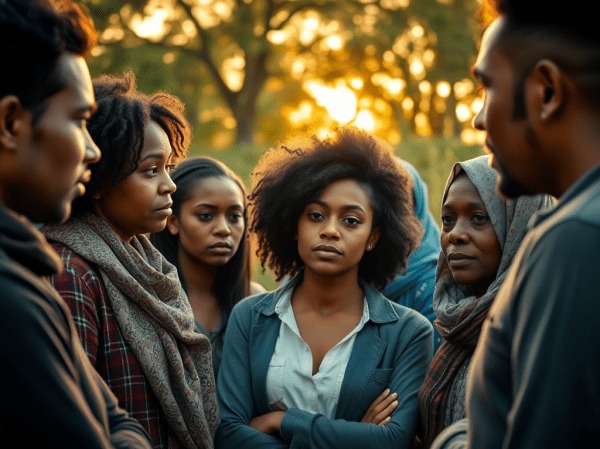
In the face of these predicaments we urge all authors to write about people, because people are always thinking and talking about people, and if we still believe in democracy, in the age of mass communication, only people can help us out of the current impasse? Strong community belonging separating “us” from “them” remains a fact and an obstacle, as demonstrated in the US elections of 2024. Can humans in the next decade be intertwined in this historic aim of coming together? Through kindness? Revolution? Or will a yet-unknown form of solidarity provide a new basis for democracy?
Les mer «Understanding Our Crises: A Call for Collective Reflection»