
I stepped on the ground of Valencia and wept like a child
Perhaps I had glanced to the sky, once more,
While tears burnt my skin.
This is me, the black of ulcerated flesh
This is my wound
What is left of a man
A sick animal, kneeling
In the wreckage of his memory.
I stepped on the ground of Valencia and wept like a child
Left my dead behind
Behind my tongue
And my dreams,
My soul, dying
By the blows of its executioners.
Chegada a Valência
Pisei o solo de Valência e chorei como uma criança
talvez tivesse olhado para o céu, mais uma vez,
enquanto as lágrimas me queimavam a pele.
Este sou eu, o negro de carne ulcerada
Esta é a ferida
que resta de um homem
um animal doente, soçobrando
nos escombros da sua memória.
Pisei o solo de Valência e chorei como uma criança
deixei para trás os meus mortos
para trás a minha língua
e os meus sonhos,
a minha amada, morrendo
sob os golpes dos seus algozes.
Moria
The fire devours your house
The one that stayed
Of meek possessions
Brought in the trip.
The fire licks everything
While the sons
Sleep outside
And the future is now
An uncertain nothing
Before the indifference
Of Europe,
Once more.
Moria
O fogo devora-te a casa
aquela que ficou
dos parcos haveres
trazidos na viagem.
O fogo tudo lambe
enquanto os filhos
dormem ao relento
e o futuro é agora
um nada incerto
perante a indiferença
da Europa,
uma vez mais.
Daily slaughter
1.
Because one can only dream
in someone else’s place, I write
and still succumb
on a muteness without an exit
because the tongue doesn’t save the gaze
nor the hand, no hand, can touch you.
You go through, with eyes on the ground,
That line drawn by promise
For which you traded all money for
Bringing sons,
To whom, smiling, you talked to
Of a new world
Far from war far from hunger
You have waited long days adrift
While the child died in the arms of the mother
And the land was seen from afar
You sang, quietly, while crying
And dressed the shroud of gaze
God, that God, where was He now?
No choirs no psalms
The wind went quiet over the sea
Later would be another one
In the place of another one, endless,
The sea’s light is cruel, Lord
And land keeps getting closer
But lips are drying, hunger devastates
The nights are cold cold
God, that God, the God of others, where was He now?
The land is so close
The eyes blind me
Of staring at the sea’s light
The promise made itself night
And I sing, quietly, a psalm
Waiting for an answer
God, that God, has forsaken us?
The land was so close. At the distance of a dream.
Abate diário
1.
porque só se pode sonhar
no lugar de um outro, escrevo
e ainda assim sucumbo
numa mudez sem saída
porque a língua não salva o olhar
nem a mão, nenhuma mão, pode tocar-te.
Percorres, de olhos no chão,
essa linha traçada pela promessa
pela qual trocaste todo o dinheiro
trazendo os filhos,
a quem, sorrindo, falaste
de um novo mundo
longe da guerra longe da fome
esperaste longos dias à deriva
enquanto a criança morria nos braços da mãe
e a terra se avistava ao longe
cantaste, baixinho, enquanto choravas
e vestias a mortalha do olhar
deus, esse deus, onde estava agora?
Nenhum canto nenhum salmo
o vento calou-se sob o mar
Mais tarde seria um outro
no lugar de um outro, sem fim,
a luz do mar é cruel, senhor
e a terra está cada vez mais próxima
mas os lábios secam, a fome devasta
as noites são frias frias
deus, esse deus, o deus dos outros, onde estava agora?
A terra está tão perto
os olhos cegaram-me
de tanto olhar a luz deste mar
a promessa fez-se noite
e canto, baixinho, um salmo
à espera que ele nos responda
deus, esse deus, abandonou-nos?
A terra estava tão perto. À distância de um sonho.
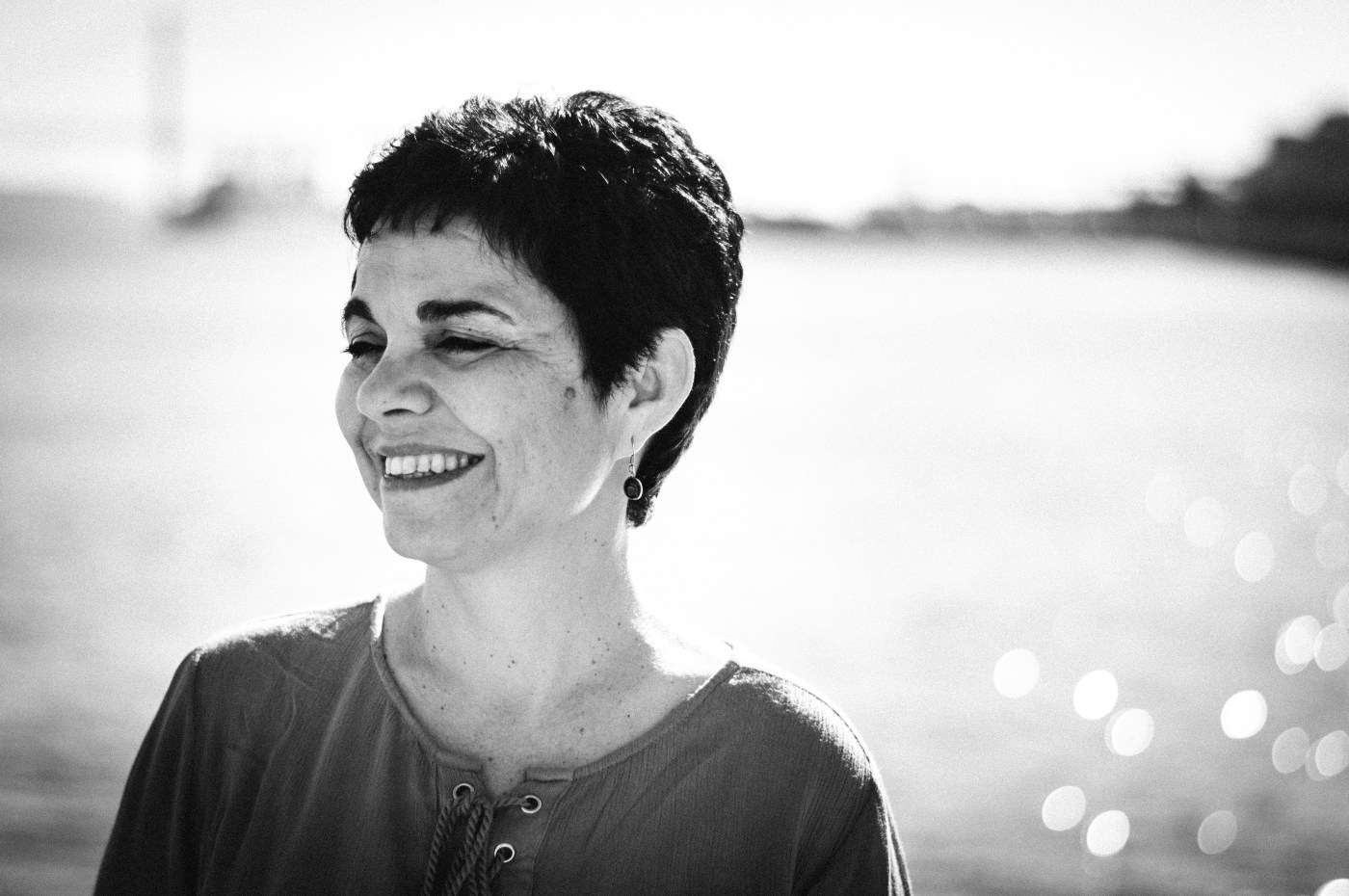
Translated by Tomás Cunha / Photo by Vitorino Coragem.
Maria João Cantinho was born in Lisbon in 1963. Professor, essayist and poet, she has published various works that range from poetry to fiction and essays. She was a finalist for the Telecom prize in 2006, and in 2016 won the Glória de Sant’Anna prize for her book “Do Ínfimo”. She also won the Portuguese PEN Club prize for the modality of best essay in 2020. She is an active member of the Portuguese PEN Club, the APE and the APCL. She regularly publishes in academic and literary magazines and is also the editor of the online magazine “Caliban”.
NWCC give thanks to Maria João Cantinho for these poems!

 KLIMAAKSJON / NORWEGIAN WRITERS´ CLIMATE CAMPAIGN // NWCC