
The first thing I recall about pollution on the North Coast is not statistics, but a smell—a mixture of salt, decaying seaweed, and synthetic substances fermenting in the sun. It’s the kind of smell that clings to the deep recesses of your nostrils, like some unmetabolizable memory. Sometimes I think about the texture of it too—the way oil slicks shimmer with rainbow colors in tidal pools, deceptively beautiful, like a bruise. The way black tar sticks to the soles of your shoes, and you carry it home without meaning to, tracking it across clean floors.
In February 1977, a Kuwaiti oil tanker went down in the waters off northern Taiwan. I never witnessed that disaster firsthand, but its legacy persists. Those black things—heavy oil, lubricants, paint flaking from ship hulls—they’re like a curse that replays itself every few years. 2008, 2016, similar shipwrecks recurring again and again, different names, same script. Each time a hull splits, the leaked black liquid transforms the intertidal zone into an enormous specimen jar, fish and shrimp and crabs and shellfish encased layer by layer, like some absurd art installation.
I’ve always felt that pollution has a peculiar cumulativeness. Not the kind of dramatic instantaneous eruption, but slow, nearly invisible accretion. In summer the Kuroshio Current brings garbage from the south, in winter the northeastern monsoon pushes waste from China’s coast. Taiwan’s geographic position is like a passive interception net—you don’t even know who to hate.
Each time a hull splits, the leaked black liquid transforms the intertidal zone into an enormous specimen jar, fish and shrimp and crabs and shellfish encased layer by layer, like some absurd art installation.
Once I watched volunteers collecting beach trash on the North Coast. They found medicine bottles from across the strait, packages of highly toxic pesticides, even religious statues. I thought these objects, in their process of drifting, had already lost their original meanings, becoming pure matter—matter the ocean cannot digest. Six hundred thousand pieces of debris per square kilometer, a number so large it becomes meaningless. But when you see a crab surrounded by styrofoam fragments, unable to move, dead in a crack between rocks, you understand that numbers are actually the least important thing.
I once wrote a poem about the North Coast’s pollution: One thing presses against another / overflowing decimal point / like sewage along the coast / progesterone and estrogen mix / cephalosporin with penicillin / life and death together subdued… This is how it begins. The poem was written about the memory of a cargo ship polluting the North Coast again in 2016.
I can’t say exactly when I started caring about the North Coast. Perhaps it was some winter when the northeastern monsoon whipped the waves into white violence, standing on a wave-cut platform somewhere, suddenly realizing these volcanic rocks had been here for millions of years. And I, along with everyone passing through, am merely an instant in its life.
I can’t say exactly when I started caring about the North Coast. Perhaps it was some winter when the northeastern monsoon whipped the waves into white violence, standing on a wave-cut platform somewhere, suddenly realizing these volcanic rocks had been here for millions of years.
The North Coast extends eighty kilometers from Taiwan’s northern tip, containing almost all the geological features of the island’s northern edge. Andesite coasts, sand beaches, gravel beaches, headlands and bays—like evidence left by time. Those rocks carved by wind, caves hollowed out day after day by waves, the intertidal zones exposed at low tide—each place has its own rhythm, its own ecosystem.
What lives in the tide pools, you have to crouch down to see. Crabs, anemones, barnacles, small fish—they live precise lives in the gaps between stones, dependent on the rhythm of tides, dependent on this sea remaining as it was. The hermit crabs trade shells like houses, carrying their homes on their backs. Sea anemones wave their tentacles in the current, looking deceptively soft until you touch one and feel it retract. Everything here operates on a schedule written by the moon—feeding when the tide comes in, waiting when it goes out. This is a world of miniature dramas, of predation and survival happening at a scale you’d miss if you didn’t stop and look. But now every time I go, I see new plastic fragments wedged in the reef rocks, styrofoam like some malicious decoration, adhering to every crevice. How will the hermit crabs adapt when all the shells are gone, replaced by bottle caps?
Everything here operates on a schedule written by the moon—feeding when the tide comes in, waiting when it goes out. This is a world of miniature dramas, of predation and survival happening at a scale you’d miss if you didn’t stop and look.
Taiwan’s North Coast becoming a shipping route wasn’t something it could decide for itself. The geographic position was there, Keelung Port’s (Taiwan’s main northern harbor) natural deep-water conditions were there. In the latter half of the nineteenth century, when steamships needed coal, when great powers needed bases along shipping lanes, the North Coast was thrust onto a historical stage. At 8 a.m. on August 5, 1884, the French fleet opened fire on Keelung right on schedule. This punctuality was somewhat absurd, like keeping an appointment. it wasnt Keelund in itself France was after, but the nearby coal mines—those black stones that could keep warships sailing, that could sustain their colonial wars in Southeast Asia. Keelung just happened to be in that position. To the eyes of the French Empire, the landscape of the North Coast was reduced to a mere set of strategic assets: a natural deep-water harbor and an endless supply of coal. Keelung just happened to be in that position, a pawn in a larger game. While the empire saw only resources to be extracted, the life of the coast—the tides, the reefs, and the people—remained invisible to them.
The war lasted half a year. In the end, the French left a cemetery in Keelung, burying soldiers who died there. Those granite tombstones are still on city streets, orderly as some indigestible foreign matter. This war prompted Taiwan’s provincehood, establishing northern Taiwan’s political and economic status. But the more profound impact was that it marked the fact that the North Coast had become a contested shipping hub.
While the empire saw only resources to be extracted, the life of the coast—the tides, the reefs, and the people—remained invisible to them.
The shipwrecks of 1977, 2008, and 2016 were more than just statistical anomalies; they were the inevitable fallout of a world reshaped by human will. While one might speak of the ‘probability’ of accidents, it is the very invention of shipping lanes—humanity’s attempt to impose order onto the waves—that birthed the possibility of such disasters. Though this coastline belonged to its own ancient, wordless rhythms for millions of years, the arrival of man has tethered it to a different clock. Today, it no longer belongs to itself; it has been claimed by trade routes and vessels that treat it as a mere transit point. Those who live here, and the creatures in the tide pools, must now endure a fate they did not choose—a recurring cost of a history they never asked to join.
I remember once seeing Cambodian artist Vandy Rattana’s work Bomb Ponds in a Taipei art space. It was a small gallery tucked away in an alley. I went on a weekday afternoon when there was no one around, wandering alone in that modest space.
Photographs and video works hung on the walls. Ponds. Ponds of various sizes, water surfaces calm, covered with green plants, some blooming with lotus flowers. The light was soft, the composition refined—at first glance it looked like nature photography. I even found it rather beautiful.
Then I saw the title: Bomb Ponds.
The exhibition description was brief. In the 1960s and 70s, the United States dropped over 2.7 million tons of bombs on Cambodia, creating over 110,000 bombing points. Later these craters filled with water, plants grew, they became ponds. Now local people raise fish in them, grow vegetables, incorporating them into daily life.
The light was soft, the composition refined—at first glance it looked like nature photography. I even found it rather beautiful. Then I saw the title: Bomb Ponds.
I looked at those photographs again. They were still beautiful. This left me somewhat uncertain how to react. You can’t call a bomb crater beautiful, but after forty years had passed, it had indeed become something beautiful. Plants don’t care what lies beneath—they grow anyway. Fish don’t care how the pond came to be—if there’s water, they swim.
I tried to imagine the moment a bomb fell—the thunderous roar, earth flying, that crater just formed. But I couldn’t. Before my eyes were only these quiet, even peaceful water surfaces. Time transforming violence into landscape—This alchemy of time self has a peculiar cruelty.
Plants don’t care what lies beneath—they grow anyway. Fish don’t care how the pond came to be—if there’s water, they swim.
Standing before those photographs, I remembered visiting the North Coast before, seeing reef rocks polluted by oil. They were black, and nothing could grow. But a few years later when I returned, algae had covered them again and the crabs had come back; on the surface, it looked fine. Only the ecosystem was no longer the original one—sensitive species like the Gelidium (red seaweed) struggled to return to their former density , and the larval fish that once sought refuge in the seaweed forests were trapped by congealed heavy oil before they could ever grow, preserved like specimens in black amber. Some species couldn’t return , and the fundamental balance of the ecosystem remained broken . Surface recovery doesn’t equal true recovery.
Forty years, enough for a bomb crater to bloom with lotus. Ten years, enough for reef rocks to regrow green. But you know it’s not the original. The stories of these Cambodian ponds reveal a chilling truth: the imperial violence of the Cold War era manifested a form of enduring violence against the landscape itself. While a decade can perform a surface-level camouflage, it cannot restore what was stolen. We must strive to avoid such a trajectory of destruction, for once the original soul of a place is lost, it is changed forever. We must avert this path, for the monuments to forgotten catastrophes are concealed within the very thoughts that witness the landscape.
While a decade can perform a surface-level camouflage, it cannot restore what was stolen. We must strive to avoid such a trajectory of destruction, for once the original soul of a place is lost, it is changed forever
I don’t remember how long I stayed in that gallery. When I left it was already dark, Taipei’s night market voices loud. Those Cambodian pond images remained in my mind, mingled with memories of the North Coast.
I thought of Gelidium. That red seaweed that grows only in the North Coast’s clear currents, a subtropical to temperate species, mainly distributed in the Northwest Pacific—Russia, Korea, Japan, and northern Taiwan. It’s environmentally fastidious, requiring clean water, swift currents, precise temperatures. Each spring, those women who make their living diving and harvesting—a tradition that has existed along East Asian coasts for ages, we call them ama or «sea women,» now all in their seventies—still dive to the reefs near the low tide line to harvest. They can only work in shallow waters now, constrained both by the natural fading of their aging bodies and the fact that the deeper, once-fertile reefs have been stifled by layers of silt and industrial sediment. Yet, they still remember the language of the tides, and how to find life hidden in the cracks of the rocks—wisdom that lives only in the hands.
They can only work in shallow waters now, constrained both by the natural fading of their aging bodies and the fact that the deeper, once-fertile reefs have been stifled by layers of silt and industrial sediment.
After harvesting the seaweed, they repeatedly sun-dry the Gelidium along roadsides, the purple-red gradually becoming beige. The seaweed spread on the ground like natural carpets is a unique North Coast landscape, and proof of the sea’s health. But after the 2016 oil spill, Gelidium died in large quantities. The sea women harvest less and less, young people no longer go to sea. This tradition that has existed for over a century may end with this generation.
Gelidium, the kelp forests that form from April to June each year, the crabs and anemones living precise lives in tide pools, but also the people who know how to coexist with the sea, those who remember what the sea originally was. Once these things are lost, they can never return. You can’t grow the same Gelidium in a different place, you can’t restore the original ecosystem by cleaning up, and you certainly can’t learn through books what the sea women remember with their bodies. This is what irreplaceable means.
Those Cambodian ponds are like this; the North Coast is the same—landscapes defined by a silent accumulation of scars. Time can make wounds appear healed and transform violence into scenery, but some destructions are final. What we can do is stay awake to the friction between the surface and the history beneath. Before these places completely dissolve into ‘landscape,’ we must remember them as they were—fragile, broken, and utterly irreplaceable.
You can’t grow the same Gelidium in a different place, you can’t restore the original ecosystem by cleaning up, and you certainly can’t learn through books what the sea women remember with their bodies. This is what irreplaceable means.
And then do what we can to let them continue existing.
The North Coast is still there. Gelidium still grows, sea women still dive, tides still rise and fall, volcanic rock still pounds with waves. But in what form it continues to exist there is no longer something it can decide for itself. One hundred and forty years ago France wanted coal, now China across the strait wants the entire island. The threat is more abstract now—not cannon fire at 8 a.m., but military exercises that encircle the island, fighter jets crossing the median line, the slow accumulation of pressure. Among these greater forces—the threat of war, the demands of shipping, the logic of trade—the North Coast’s fate never belonged to itself. Not to the Gelidium, not to the sea women, not to the creatures living in tide pools. It simply exists there, a silent anchor amidst the shifting wills of empires. Geography is destiny, they say. But I think it is more accurate to say that geography holds our violence. The coastline cannot look away. It has endured for millions of years, bearing scars from a human history that is, in geological time, but a single wave’s spray. We are a brief, violent heartbeat, leaving shadows the tides can never erase.
/
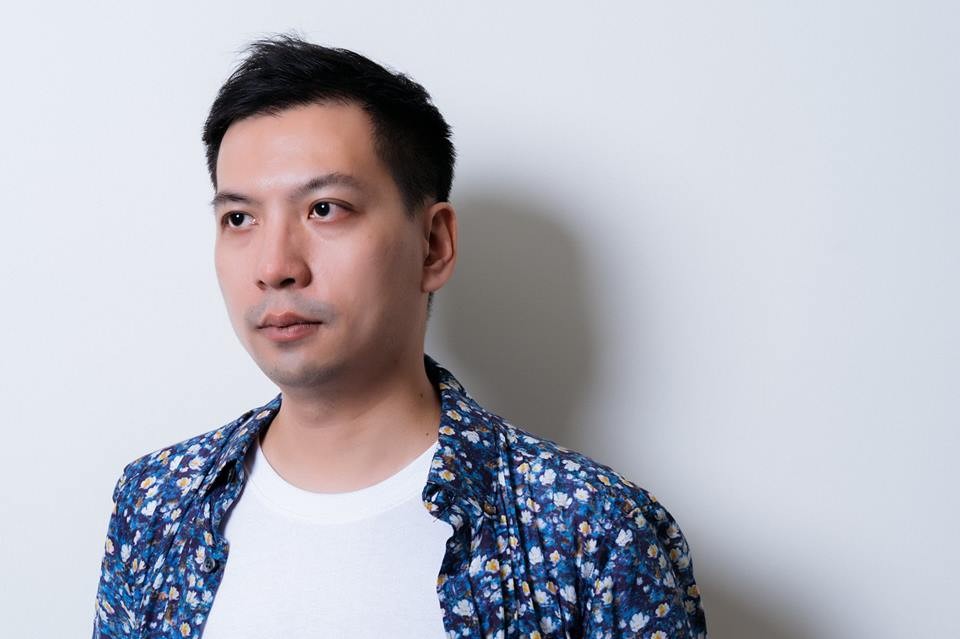
Enkaryon Ang is an acclaimed Taiwanese poet and interdisciplinary artist who has published multiple poetry collections since 2009, including Rorschach Inkblot, Hedgehog, and A Galaxy of Howness. His poetry explores themes of post-digital society, climate change, identity, and memory, often employing animals and nature as profound metaphors. Through international residencies at UNESCO Cities of Literature (Prague, Barcelona), Cove Park (UK), Grey Projects (Singapore), and Saari Residence (Finland), he has developed a distinctive poetic voice addressing geopolitics, linguistic politics, and colonial legacies in East and Southeast Asia.
Currently, Ang is developing a poetic project examining the re-wilding of European plants in Taiwan and Asia, investigating botanical migration and the imperial histories embedded in transplanted flora, questioning notions of belonging and ecological imperialism through poetic language.
Photo: Chih Yuan Wang.
//
Å anerkjenne noe – eller noen – som uerstattelig eller umistelig, kan være en transformerende opplevelse. Det er ofte her naturrelasjonen oppstår. Slike erkjennelser melder seg når kjærlighet, beundring og en dyp relasjon til en naturtype settes i kontrast til tap eller trusselen om det. Klodens umistelige natur, og den nærmest hellige kvaliteten på det vi respekterer, beundrer og opplever som verdig, forvandler oss til vitner og kan kalle oss til å virke som talspersoner, beskyttere, aktivister og forkjempere. Menneskeforakten i krigene som føres mot bl.a. ukrainerne og palestinerne er også en forakt for livet til fugler, pattedyr, insekter, jordbruk og planteliv. Kanskje kan større kjærlighet til og respekt for våre slektninger i naturen også bidra til en dypere begrunnet motstand mot krigens logikk, dvs. at hensikten helliger målet om total ødeleggelse, for å oppnå erobringer som eo ipso er en fornektelse av historisk kunnskap, ja av relasjonell kunnskap overhodet. Anerkjennelsen av det uerstattelige og umistelige kan markere begynnelsen på et paradigmeskifte.
Vi søker tekster som belyser skjønnheten, verdigheten, den vitale betydningen og den symbolske kraften til et bestemt landskap, en naturart, et økosystem. Vi oppfordrer til utforskning av det kritiske potensialet som ligger i ideen om det «umistelige» – som et motpunkt til den dominerende ideologien om erstatningsevne, bytteverdi og markedsdrevet logikk. Enhver sammensmeltning av estetisk erfaring, etisk motstandsarbeid og levende forbindelser til en natur som motstår forsømmelse og ødeleggelse, er verdt å skrive om og kultivere, også for å ære Thomas Hylland Eriksens livsverk som fikk sin kraftfulle avslutning med boken Det umistelige.
Red.
///
Tidligere artikler i serien:
Biskop Sunniva Gylver: Om Gud, natur, kontemplasjon og aksjon
David Zimmerman: Klyvnad och kärlek
Anders Dunker: Frem til Naturen!
Eirik Røkkum: Livet er ikke vanskelig å be
Johan Rockström & Anders Dunker: The invaluable safe zone
Josefine Gjerde: Kunsten å se fugler
Kathleen Rani Hagen: Skal menneskene slå ring om KI?
Serien er utgitt med støtte fra Fritt Ord.


 KLIMAAKSJON / NORWEGIAN WRITERS´ CLIMATE CAMPAIGN // NWCC
Leave a Reply