Dear friend,
Since the beginning of the full-scale Russian invasion, I have lost almost all words. They have become so tiny in the shadows of griefs and pains that they are hardly to be found among the latter. The very words that used to be a home for my restless thinking are now a lonely wall of a house bombed by the Russians, with only two sides: testimony and resistance. Language has no other forms nowadays than testimony: the testimony of those who have lived or continue to live in the catastrophe; and it has no other purpose than resistance: the resistance to those who deny your very existence. Everything else around is absorbed by the silence that settles in the destroyed cities and villages, in the yards and basements, among the lumps of concrete, metal, pieces of cloth and furniture, invisible mines and tripwires in houses and gardens, broken glass pieces, mangled trees, and blackened blood. Perhaps it would be easier to talk about all of this at a certain distance, and perhaps the right words, texts, and books about Russian crimes will be discovered by those who have never known this silence but will open themselves to it, so will be able to find its scattered signs everywhere. It is quite possible that they won’t even be Ukrainians; perhaps they will be Norwegians: yourself, your colleagues, or friends. I would like it to be so.
I still don’t know how to talk about this, despite the fact that ordinary language has absorbed the reality of war like a sponge. It seems, all the words have already changed their meaning: flowers that open their petals near someone’s house, in someone’s yard, by the road, or in an open field – somewhere near these flowers have remained other “petals” (“liepiestki”), as Russian PFM-1 mines are called. You may also know them as “butterfly mines”. Such mines injure a lot of people and children, who step on such things accidentally or think it’s a kind of toy. There are millions of such “petals” or “butterflies” on the territory of Ukraine: my country is the most mined in the world[1]. There are many other kinds of mines in forests, parks, playgrounds, houses, and the sea. The language is mined as well: there are almost no paths left in it that could be used to find a safe place or to protect the most vulnerable. Children learn this mined language the fastest, so it becomes the ordinary one for them.
You would probably like to know more about the current war situation from me, and I will certainly tell you some of what I know from my, rather limited, experience. But you should also know that not many people here are willing or able to share their experiences, especially those who lived through real terrors and tragedies. Just as many of our grandparents could not talk about WWII, the Holodomor in 1932-1933, gulags, deportations, russification, and repressions for almost 70 years under Soviet occupation, not even mentioning the Russian Empire that preceded it for centuries. It seems, that all generations living in Ukraine know this silence of those who suffered such atrocities and understand it well, as it doesn’t need words to be understood. All that has changed this time is the poisoned industry of gas, oil, and fossil fuels that feed their current imperialism, allowing this genocidal machine to keep working “efficiently”. It is widely known that fossil fuels are a major part of their economy, without which the current war would hardly be possible.
What scares me even more nowadays is the silence that covers the territories of Ukraine still occupied by Russia: Luhans’k, Donets’k, Zaporizhzhia, Kherson regions, and Crimea. What is happening where you can’t speak and live freely? Unfortunately, we know what lies behind it from the people’s experiences in de-occupied territories: «When we talk about the Russian occupation, it means enforced disappearances, rape, torture, murder, denial of identity, forced deportations of Ukrainian children for adoption in order to re-educate them as Russians, filtration camps, forced mobilization into the Russian army, and mass graves»[2].
Recently, relatives from Crimea sent my fiancée a selfie, wearing vyshyvankas (traditional Ukrainian shirts) and congratulating us on Independence Day of Ukraine. We were so proud of them, but also afraid that their messengers could be checked by the occupiers anytime, so we asked them to delete the photos from the phones. Nowadays, as if we were still in the dark twentieth century, people are imprisoned, tortured, and killed for any manifestation of their own identity that does not coincide with the vision of the Russian occupation regime.
*
My closest friends now are books about wars, occupations, famines, and genocides. One day, I came across Wojciech Tochman’s reports on Rwanda, in his book «Today We Will Draw Death», some of my lost, numb words were found: «I’m slowly getting used to it. I listen and think: I will probably never hear about anything more cruel, nothing more cruel than man can invent. But no. What I hear today is nothing compared to what I will hear tomorrow. What I am writing about today is nothing compared to what I will write about later.»[3] After the first photos from Bucha, which I saw in the middle of the night in early April last year, I didn’t think there could be anything more horrible in this war, but it was its very face. Tens of thousands of civilians killed in Mariupol, the massacre of prisoners in Olenivka, the massacre in Borodyanka, the massacre in Yahidne, the massacre on the Zhytomyr highway, the mass graves near Izium, endless strikes with thousands of civilian deaths in Kramatorsk, Dnipro, Zaporizhzhia, Uman, Chaplyne, Vinnytsia, Chernihiv, Kherson, Nikopol and many others. The deportation of children, dozens of children. Kakhovka dam explosion.
It happens every day, even if you don’t see it in the news. We are killed every single day.
I don’t really like to use numbers during the war, they are easy to find in open sources and you’ve probably seen them. I believe that each 1 has a name: like in the basement in the village of Yahidne, where the occupiers forcibly held locals in the spring of 2022. On the door of that basement, the locals kept a calendar of their stay there, and next to it, they wrote the names of the dead among them. On the right are the names of people who died there, on the left are those who were shot by the Russians.
Yanyuk T., Hrytsenko L., Radchenko S., Shevchenko V., Bykovets K. –
As well as those two Norwegian paramedics, who saved people near Bakhmut, they also have names: Sander Sørsveen Trelvik and Simon Johnsen.
Everyone has their own names.
As you like to say, quoting Andrei Kurkov, we are a nation of individualists who become one in times of need. I would like to know all these individualists by name.
In the same way, I know that all the crimes of the Russians, all their modern imperialism, cannot be hidden behind one name, «Vladimir Putin» or any other. They all have their own names, thousands of those who commit crimes and millions who support them.
*
My fiancée and I live in Lviv, a big and beautiful city in the very west of the country. It is, as one often hears, «relatively safer», and this is true as long as one understands that nowhere in Ukraine is really safe. Russian missiles and Iranian drones have killed many people here and destroyed their homes as they did in numerous places in Ukraine.
Next to our house in Lviv is a large military hospital, and every day we meet many soldiers nearby: exhausted, with black eyes and fingers, often on crutches, in wheelchairs, in bandages. Usually, they smoke cigarettes at the entrance to the hospital, and keep a hard silence among themselves, while everyone else around them can live and speak.
On the opposite side of our house is Mars Field, as it was called back in Soviet times. Before the full-scale invasion, locals used to relax in this place: lying on the grass, reading books, chatting about this and that in the shade of the trees. Now this large field is half-filled with graves, with flags fluttering over each of them as if they are resisting death itself and its immobility. It’s not like any other cemetery I’ve ever been to, it’s more like a garden with many people around. Some of them come here every day: parents, children, brothers and sisters, grandchildren, grandparents, friends, colleagues and comrades. Many of the boys and girls buried here are my age, many of them younger than me. Every time I come here, I try to memorize their names, years of birth and faces.
*
While I am writing you, I have one more book on the table, «Postwar. A History of Europe since 1945» by Tony Judt. You probably know it well, since without it it is difficult to have a more or less coherent historical view of our part of the world. It was written in 2005, when there was no Russo-Georgian war, no annexation of Crimea, no war in Donbas, no full-scale Russian invasion, and every time it is so strange for me to look at its title as if it were some kind of historical or temporal paradox: what does «Postwar» mean if the war hasn’t even started yet? Back then, during the twentieth century, no one saw us and many other nations under Soviet occupation, and therefore no one saw the Holodomor, the executions of intellectuals, deportations, labor camps, and the denial of identity, even though a lot of families have their own memories of it, including my own. Reading this book, as well as the others, I am afraid that one day we will not be seen again. Or, rather, everyone will pretend not to see us, sometimes remembering in conversations that there is still the war in Ukraine as if we had invented it by ourselves, or as if we are fighting a shadow, not actual people who decided to commit crimes.
Thank you for seeing and thinking of us, dear friend. This is the first time we have so many friends in such difficult times. Takk for at du ser oss og tenker på oss, kjære venn. Det er første gang vi har så mange venner i så vanskelige tider.
Yours,
Oleh
[1] See: https://www.washingtonpost.com/world/2023/07/22/ukraine-is-now-most-mined-country-it-will-take-decades-make-safe/
[2] See: https://voxeurop.eu/en/nobel-peace-prize-oleksandra-matviichuk-ukraine-unpunished-evil-grows/
[3] See: Wojciech Tochman, «Dzisiaj narysujemy śmierć», Wydawnictwo Czarne, Wołowiec 2010, p. 16.
//
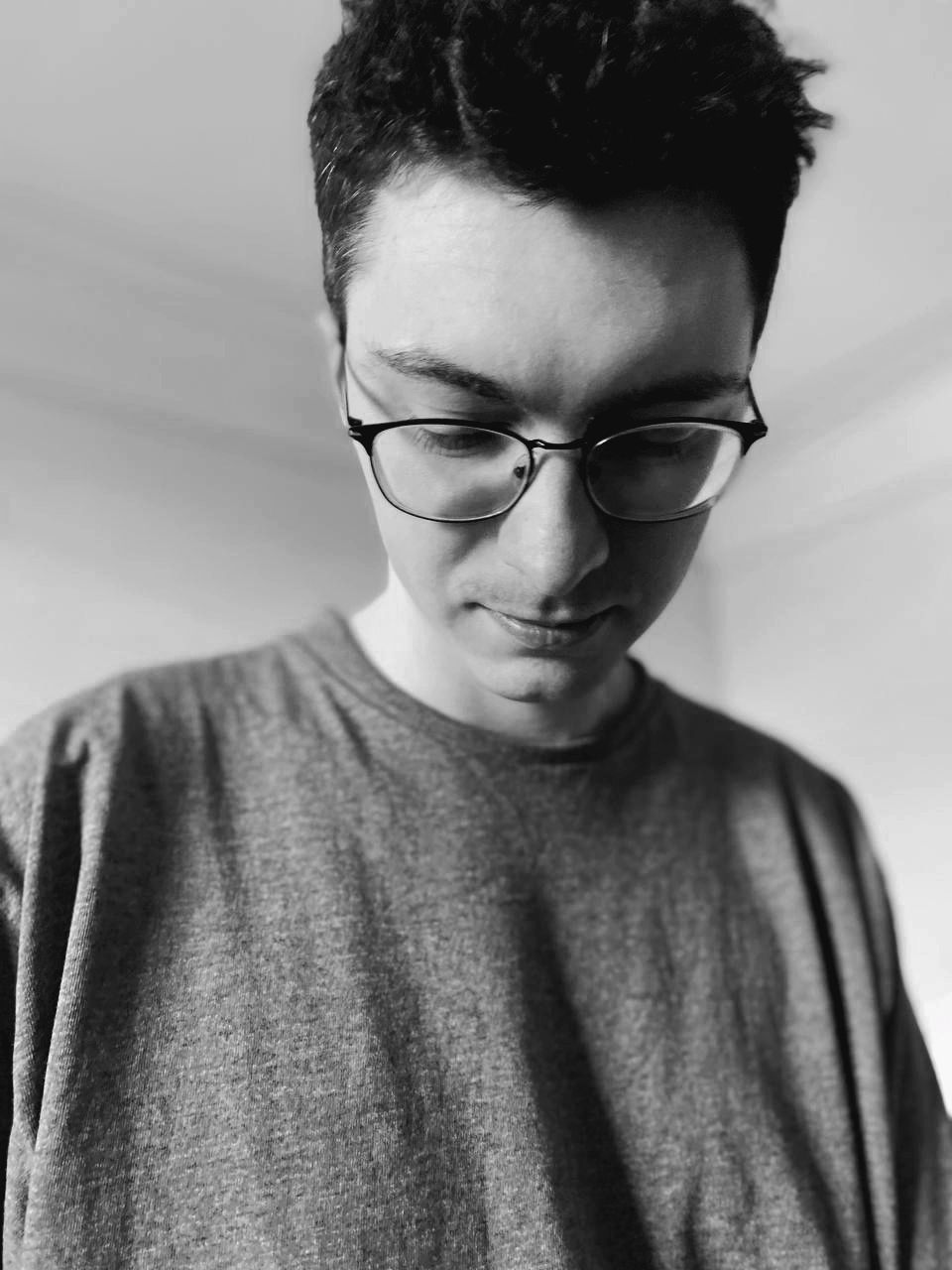
Oleh Bohun is a poet and translator, based in Lviv, Ukraine. Bohun’s first book of poetry, The Darkly-Perceived Part (Kharkiv: kntxt, 2021), was shortlisted for the best poetry books of 2021 by PEN Ukraine. His poetry has also appeared in translations in English, Polish, German, Norwegian, and other languages. Bohun has curated and participated in numerous poetry events at literary festivals, including PEN-UPenn Your Language My Ear, Book Forum Lviv, Book Arsenal, Kyiv Poetry Week, and others. As a translator, he works on philosophy, poetry, and nonfiction. Currently, he is also the assistant editor of the Klimaaksjon / Norwegian Writers’ Climate Campaign.
/
Published with funding from the Fritt Ord Foundation.
Read also:
Ostap Slyvynsky / Donbas coal industry: between a difficult past and an unknown future
Andrei Kurkov / Ukraine. Ecological Apocalypse now
Om krigen midt i et mislykket oljeeventyr / Erling og Jonas Kittelsen
Hvorfor sprenge en oljerørledning? / Arne Johan Vetlesen
Ilden, vi varmer os ved, ilden, vi ødelægger med / Carsten Jensen
Russisk gass og greske guder / Espen Stueland
Si det ømt og skarpt / Freddy Fjellheim
Finding a way through the minefield / Michael E. Mann & Anders Dunker / En vei gjennom minefeltet

 KLIMAAKSJON / NORWEGIAN WRITERS´ CLIMATE CAMPAIGN // NWCC